Special Customs Regimes in Morocco: Codes, Types and Complete Guide (2026)
Morocco special customs regimes (Régimes Économiques en Douane - RED) allow industrial importers and exporters to suspend customs import duties (2.5% to 40%), domestic VAT (20%), and parafiscal taxes on materials entering Morocco for inward processing, transit, or bonded storage. Managed electronically via the BADR ADII portal, these regimes preserve corporate working capital by eliminating cash outlays until final re-export or domestic release. Navigating specific Morocco customs regime codes—such as 040 for Temporary Admission (ATPA), 030 for bonded warehousing, and 060 for free zones—requires exact Morocco HS code lookup within the official Morocco customs tariff nomenclature to ensure compliant, penalty-free customs clearance in Morocco.

|
| Aerial view of the Port of Tangier Med, the Mediterranean's leading container transshipment hub handling special customs regimes (ATPA and ZAI Free Zones). |
1. Introduction: Special Regimes and the Moroccan Customs Ecosystem
In my daily work coordinating freight consignments and customs clearance across Tangier Med and the Port of Casablanca, I observe that the single largest differentiator between profitable industrial exporters and financially drained operations is their command of Morocco special customs regimes. Governed by Morocco's Customs and Indirect Taxes Code (Code des Douanes et Impôts Indirects - CDII) and managed by the Administration des Douanes et Impôts Indirects (ADII), these regimes provide the legal mechanism to import goods with duty and tax suspension.
When raw components, fabrics, automotive electronics, or manufacturing tools enter Moroccan sovereign territory, standard tariff provisions impose import duties ranging from 2.5% to 40%, an added 20% domestic Value-Added Tax (TVA), and a 0.25% import parafiscal tax. For an industrial manufacturer transforming inputs intended strictly for European or African export, prepaying these tariffs would lock up hundreds of thousands of dollars in unproductive liquidity.
This is where Morocco customs procedures governing economic regimes come into play. By assigning the correct Morocco customs regime codes to an import declaration in the BADR system, businesses legally defer or eliminate these levies. However, the regulatory compliance burden is absolute. The customs administration treats suspended duties as conditional fiscal debts guaranteed by corporate bank bonds. Understanding the exact classification, duration, and discharging mechanisms is an indispensable operational discipline.
2. Why Morocco is a Strategic Trade Hub in 2026
Over the past two decades, the Kingdom of Morocco has undergone a profound structural transformation, solidifying its role as the premier industrial and maritime bridge connecting Europe, Sub-Saharan Africa, and the Americas. Anchoring this transformation is the Port of Tangier Med, which has ranked as the number-one container transshipment port in the Mediterranean and across Africa, processing over 9 million TEUs annually and providing regular short-sea connections to Algeciras, Motril, and Barcelona in under 2 hours by ferry.
Beyond sheer geographic proximity—just 14 kilometers across the Strait of Gibraltar—Morocco's trade architecture is bolstered by an unmatched network of Free Trade Agreements (FTAs). Key preferential frameworks include:
- EU-Morocco Association Agreement: Facilitating reciprocal tariff dismantling for industrial products under preferential rules of origin, verified via EUR.1 movement certificates or Approved Exporter statements.
- Pan-Euro-Mediterranean (PEM) Convention: Allowing diagonal cumulation of origin across the EU, EFTA, Turkey, and Western Balkan states, enabling multi-country supply chains to retain duty-free status.
- United States-Morocco FTA: Eliminating tariffs on more than 95% of bilateral consumer and industrial goods.
- AfCFTA (ZLECAF): Opening preferential intra-African trade corridors that Moroccan exporters are utilizing to ship industrial machinery, fertilizers, and packaged goods toward West and Central Africa.
This trade architecture explains why automotive giants (Stellantis, Renault) and aeronautic clusters (Safran, Airbus suppliers) established their manufacturing bases in Tangier Automotive City and Midparc Casablanca. To make nearshoring profitable, these corporations leverage Morocco temporary admission customs (ATPA / ATREE) to feed their assembly lines without friction.

|
| International road freight (TIR / CMR): Semi-trailers connecting Tangier Med to European factories in under 48 hours under customs transit seals. |
3. Import and Export Basics: Essential Documents & Incoterms
Executing compliant international trade into or out of Morocco requires absolute synchronicity between commercial documents and customs declarations. Discrepancies between weights, line-item descriptions, and tariff codes invariably trigger BADR automated holds and prolonged quayside storage fees.
Incoterms and customs: who pays what in Morocco
In Moroccan commercial practice, selecting the appropriate Incoterm under the ICC 2020 rules defines the precise boundaries of tax liabilities, transit insurance, and customs agency obligations.
When exporting out of Morocco, we advise clients to favor FCA (Free Carrier) or FOB (Free On Board) terms. Under FCA Tangier Med or FOB Casablanca, the Moroccan exporter fulfills local legal duties, registers the export Single Goods Declaration (DUM) in BADR, and discharges domestic VAT liabilities. The foreign buyer then assumes international freight risks and foreign border entry. Conversely, selling under EXW (Ex Works) out of a Moroccan factory is fraught with compliance risks: a foreign buyer without a registered Moroccan corporate Tax ID (Identifiant Commun de l'Entreprise - ICE) cannot legally clear the export DUM, leaving the local manufacturer exposed to unclosed VAT audit queries.
For inward shipments entering Moroccan territory destined for transformation under inward processing Morocco regimes, DAP (Delivered at Place) is the industry gold standard. The overseas vendor assumes transport costs to the Moroccan factory gate, while the domestic manufacturing plant handles Moroccan customs clearance using its own suspended ATPA bank bonds. Shipping under DDP (Delivered Duty Paid) into Morocco should generally be avoided by foreign shippers; overseas sellers cannot directly register for Moroccan VAT, meaning the 20% import tax becomes an unrecoverable sunken cost.
Essential Customs & Transport Documents in Moroccan Trade
| Document Name | Issued By | When Needed | Operational Practitioner Note |
|---|---|---|---|
| Single Goods Declaration (DUM) | Licensed Moroccan Customs Broker (Transitaire) | Compulsory for all imports, exports, and transit | Lodged in BADR. Requires 10-digit HS code and valid bank guarantee number. |
| Commercial Invoice | Foreign Supplier / Seller | Pre-clearance file compilation & BADR valuation | Must specify Incoterm 2020, detailed goods descriptions, unit values, and currency. |
| Transport Title (CMR / B/L / AWB) | Road hauler (TIR), Ocean line, or Airline | Manifest filing in PortNet & border inspection | Prerequisite to obtain electronic Delivery Order (BAD) from the shipping agent. |
| Proof of Origin (EUR.1 / Origin Declaration) | Customs authority of export partner / Approved Exporter | Required to claim 0% or reduced preferential duty | Without a compliant EUR.1 or invoice origin statement, standard MFN duty applies automatically. |
| Detailed Packing List | Shipper / Warehouse loader | Physical cargo inspection (visite) and scanning | Discrepancies in pallet count or gross weight vs transport title trigger customs holds. |
| Certificate of Conformity (CoC / CMIM) | Accredited inspection bodies (SGS, Bureau Veritas, Applus) | Regulated industrial and consumer goods | Mandatory under Moroccan law 24-09. Missing CoC blocks the customs BAE completely. |
| Bank Bond (Soumission Cautionnée) | Moroccan Licensed Commercial Bank | All special customs regimes (ATPA, ATREE, Transit, Warehouse) | Underwrites 100% of suspended duties and taxes against default or non-discharge. |
4. Special Customs Regimes in Morocco: Codes, Types, and Frameworks
Special customs regimes—formally codified under Articles 114 through 165 of the Moroccan Customs Code—are divided into three functional families: processing regimes, storage regimes, and movement/transit regimes. Each regime is identified by a specific three-digit code that must be keyed into box 1 of the Morocco customs declaration (DUM).
Temporary admission (ATPA): conditions, duration, guarantee
Temporary Admission for Inward Processing (ATPA - Code 040) represents the lifeblood of Morocco's manufacturing export economy. Under ATPA, manufacturers import raw materials, intermediate inputs, and packaging duty-free, with complete suspension of domestic TVA and parafiscal charges, on condition that these materials are transformed into finished compensating goods and exported.
The standard statutory authorization period is 6 months, which can be legally renewed up to a maximum duration of 2 years upon formal written application justified to the regional customs directorate before the initial deadline elapses. To benefit from ATPA, an enterprise must:
- Establish a formal production coefficient file (taux de rendement) defining the precise quantity of raw material consumed per finished unit produced, including acceptable industrial scrap (déchets).
- Lodge a binding financial guarantee (caution bancaire or caution globale) registered directly on the company's fiscal file in BADR, covering 100% of the suspended tariffs.
- Discharge the declaration before expiry via Exportation in Discharge of ATPA (Code 041), cession to another ATPA operator (Code 042), or regularized entry into local consumption with compensatory interest (Code 010).
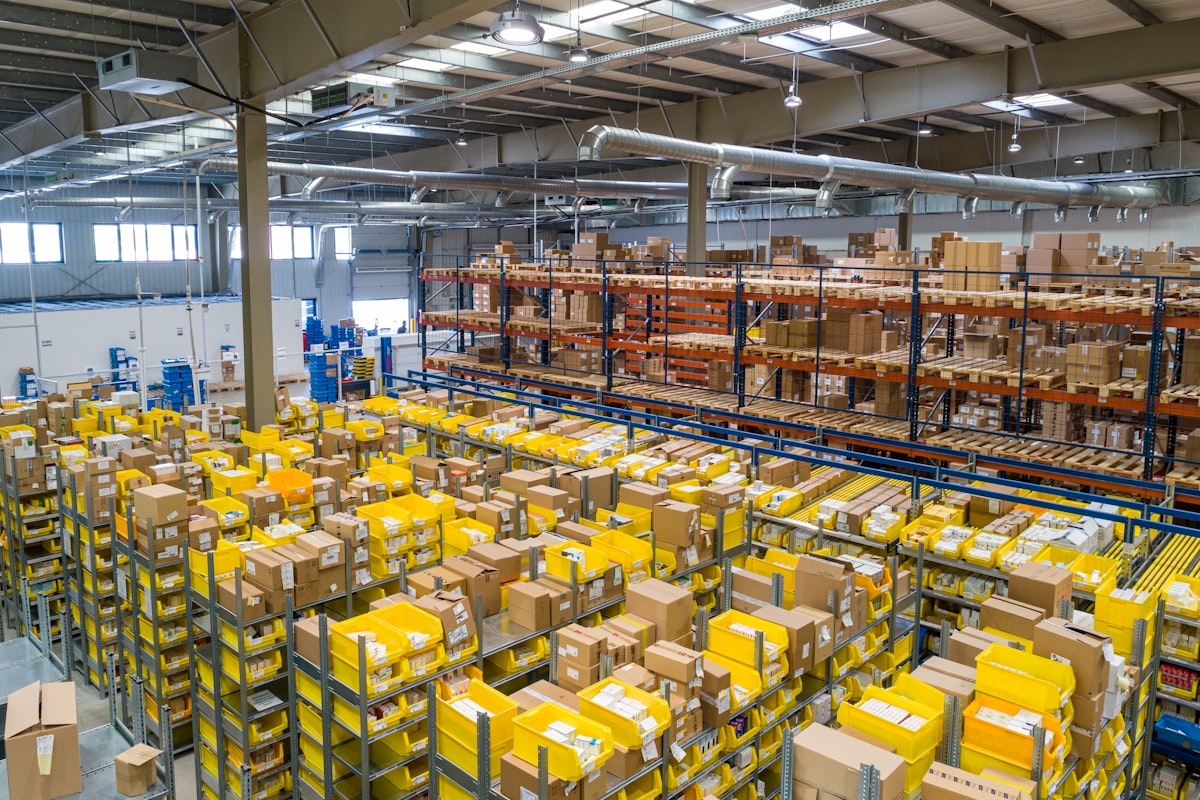
|
| Bonded warehouse in Morocco (Code 030): Strategic inventory storage with 100% duty and VAT suspension until domestic release. |
Bonded warehouse vs free zone: which one to choose?
A frequent operational dilemma among global supply chain managers is whether to store goods in a bonded warehouse Morocco (Entrepôt sous douane - Code 030) or inside a designated Tanger free zone customs perimeter (Zone d'Accélération Industrielle - Code 060).
A Customs Bonded Warehouse (Regime 030) is an approved facility located anywhere within Moroccan territory (public, private, or specialized) where goods remain duty- and tax-free for up to 2 to 3 years. It is optimal for companies whose primary objective is cash-flow optimization for domestic distribution. Goods can be extracted in partial batches into direct consumption (Code 010) as local market sales occur, paying import duties only on the exact quantities withdrawn.
Conversely, an Industrial Acceleration Zone (ZAI - Regime 060), such as the Tanger Free Zone (TFZ) or Tanger Automotive City (TAC), is a legally extraterritorial customs sanctuary. It is designed specifically for manufacturing corporations that export the vast majority (generally 70% to 100%) of their production overseas. Free zones provide permanent tariff immunity, total exemption from domestic VAT on local goods and services purchases, streamlined foreign exchange regulations, and corporate income tax holidays. If your facility produces goods for export to Europe or the Americas, establishing in a Free Zone is vastly superior to operating a traditional bonded warehouse.
Operational Insight: The 4-Hour Ro-Ro Clear-and-Pass at Tangier Med
In our daily operations coordinating automotive wire-harness components crossing from Algeciras to Tangier Med under ATPA (Code 040), timing is measured in minutes, not days. If our dispatch desk uploads the anticipatory declaration into PortNet and pre-validates the DUM against our active bank caution in BADR while the ferry is still navigating the Strait, the system algorithmically assigns the green channel (circuit vert) before the vessel berths. The semi-trailer rolls off the ferry ramp, passes through the automated license plate reader and non-intrusive container scanner in under 35 minutes, and reaches the Tier-1 assembly plant in Tangier Automotive City within 4 hours of touchdown. A single typographical error in the 10-digit HS code or a lapsed bank credit ceiling immediately throws the file into the orange or red channel, resulting in mandatory physical decanting, weekend demurrage penalties, and costly factory downtime.
5. Customs Clearance Step-by-Step: PortNet and BADR Portal
All commercial customs clearance Morocco operations are entirely dematerialized through the synergy of two sovereign digital platforms: PortNet (the National Single Window for Foreign Trade Procedures) and BADR (Base Automatisée des Douanes en Réseau, operated by ADII).
DUM and BADR: step-by-step guide
- Manifest Registration (PortNet): Prior to vessel berthing or road freight arrival, the maritime carrier or road transporter logs the electronic cargo manifest in PortNet, generating a unique summary declaration number (Gros/Article).
- Electronic DUM Lodgement (BADR): A licensed Moroccan customs broker (transitaire agréé) prepares and keys in the 6-page Single Goods Declaration (DUM). The broker links the commercial invoice, packing list, bill of lading, certificate of conformity, EUR.1, and the selected special regime code (e.g., 040).
- Algorithmic Risk Channeling: Upon submission, BADR's automated risk engine screens the file against national compliance criteria, historical importer profiles, and origin risks, routing the declaration into Circuit Vert (immediate clearance), Circuit Orange (documentary review), or Circuit Rouge (physical inspection / scanner).
- Liquidation and Guarantee Debit: Once inspected, customs tariffs are calculated. Under special regimes, the system automatically registers a debit against the importer's active bank bond rather than requiring cash payment.
- Release Note Issuance (Bon à Enlever - BAE): Once customs liquidation is completed and port terminal handling charges are settled via PortNet's electronic delivery order (BAD), BADR transmits an automated electronic BAE release, allowing the truck to exit terminal gates.
6. Transport in Morocco: Road (TIR/CMR), Sea, Air, and Rail
An efficient customs strategy must be coordinated with the physical transport modes operating across the Moroccan logistics grid:
Customs transit Morocco-Europe: documents and timelines
For industrial manufacturers trading with the European Union, International Road Transport (TIR / CMR) is the dominant modality for high-value and time-critical shipments. Semi-trailers roll onto Ro-Ro passenger ferries connecting Tangier Med to Algeciras or Motril multiple times daily. Under the TIR Convention (1975) or Moroccan transit acquit (Code 070) paired with an EU T1 transit declaration, cargo remains sealed under customs oversight from pickup to final destination.
- Tangier Med to Southern Spain (Andalusia): 12 to 24 hours.
- Tangier Med to Central Europe (Madrid, Barcelona, Lyon): 36 to 48 hours.
- Tangier Med to Northern Europe (Germany, UK, Benelux): 72 to 96 hours.
For heavy raw materials and deep-sea trade lanes, ocean container freight calls directly at Tangier Med or the Port of Casablanca. Rail freight, operated by the national rail authority (ONCF), provides direct intermodal rail shuttles between Tangier Med docks and the inland dry ports of Kenitra and Casablanca Zenata.

|
| Maritime container shipping at Moroccan ports: Global connections linking Asia, Europe, and the Americas under PortNet single-window oversight. |
7. Tangier Med and the Tangier Logistics Ecosystem
The Tangier logistics ecosystem is an integrated industrial and logistical platform connected directly to the Strait of Gibraltar. Spread across more than 2,000 hectares, the complex encompasses the Tanger Free Zone (TFZ), Tanger Automotive City (TAC), and Medhub (Tangier Med Logistics Free Zone).
The Tanger Med free zone customs procedure offers distinct operational advantages. Transfers of goods between companies inside the free zone network take place under duty exemption using internal zone transfer declarations (Déclarations de Cession). When finished vehicles or sub-assemblies are ready for export, they pass through a dedicated internal customs highway directly to the Ro-Ro terminal quays, bypassing public road corridors entirely.
8. How to Minimize Logistics Costs and Capital Drainage
Logistics expenditure in Moroccan trade is rarely inflated by ocean or road freight rates alone; rather, it is inflated by customs demurrage, terminal detention, redundant financial guarantees, and unoptimized tariff classification. To drive structural cost reduction:
- Establish a Global Bank Caution (Cautionnement Global): Rather than purchasing individual bank guarantees (soumissions cautionnées) for each import DUM, negotiate an annual revolving global guarantee with an ADII-accredited commercial bank.
- Obtain Authorized Economic Operator (OEA) Status: ADII awards Authorized Economic Operator certification to compliant companies, unlocking physical inspection exemptions, priority green routing, deferred payment credit lines, and customs clearance at home.
- Avoid Quayside Demurrage and Detention: Port terminals at Casablanca and Tangier Med allow limited free-time storage windows (typically 5 to 7 days). Initiating the PortNet anticipatory declaration 48 hours prior to vessel arrival ensures clearance paperwork is completed before the container lands on the quayside.
- Consolidate Less-than-Truckload (LTL / Groupage) Consignments: Utilizing licensed inland bonded freight stations (Magasins et Aires de Dédouanement - MEAD) permits container stripping and individual customs clearance without delaying the entire transport unit.
9. AI and Digitalization in Moroccan Customs Logistics
The Moroccan logistics sector is undergoing significant modernization, driven by predictive risk scoring in BADR, optical character recognition (OCR) in PortNet, and smart port gate technologies at Tangier Med.
CBAM and Moroccan exporters (trending): impact on exports to the EU
A critical digital compliance transition facing Moroccan industrial exporters is the European Union's Carbon Border Adjustment Mechanism (CBAM). Targeting carbon-intensive sectors—primarily cement, aluminum, iron and steel, fertilizers, and electricity—CBAM requires Moroccan manufacturers to systematically measure, audit, and submit quarterly reports detailing both direct and indirect embedded greenhouse gas emissions per metric ton of goods shipped to EU buyers.
Because Moroccan industry is heavily supported by national renewable energy initiatives (such as Noor Ouarzazate solar complexes and massive wind farms along the Atlantic and Mediterranean coasts), Moroccan exporters who digitize their carbon accounting possess a strong cost and tariff advantage over carbon-heavy Asian and Eastern European competitors facing heavy CBAM financial equalization levies.
10. Common Mistakes to Avoid in Moroccan Trade
How to find the right HS code in Morocco (+ common mistakes)
Under the Morocco customs tariff nomenclature, tariff codes consist of 10 digits, not the 6-digit WCO code or the 8-digit Combined Nomenclature (CN) code used in the European Union. While the first 6 digits are harmonized globally, the 9th and 10th digits represent specific Moroccan national subdivisions governing import duty rates, VAT thresholds, and non-tariff licensing requirements.
Frequent Morocco HS code common mistakes include:
- Directly Copying European 8-Digit CN Codes: Inadvertently keying an EU 8-digit code into BADR without looking up the corresponding 10-digit Moroccan national tariff code.
- Classifying Multi-Component Assemblies by Primary Material: Failing to apply General Rule of Interpretation 3(b) (essential character) or Rule 1, resulting in inaccurate declarations of manufactured components as bulk raw metals or plastics.
- Letting ATPA Declarations Expire: Failing to secure a written time extension before the 6-month statutory ATPA deadline elapses, which triggers automatic legal summons and forfeiture of the bank guarantee.
- Omission of Mandatory Invoice Origin Statements: Submitting a commercial invoice exceeding €6,000 without either a stamped EUR.1 certificate or an Approved Exporter authorization clause.
11. Practical Operational Checklist for Shippers
- ✓ Step 1 (Pre-Shipment Tariff Audit): Perform official Morocco HS code lookup on the BADR tariff portal. Confirm the complete 10-digit code, applicable import duty rate, VAT rate, and whether mandatory Certificate of Conformity (NM/CMIM) testing applies.
- ✓ Step 2 (Regime Selection & Bank Caution): Determine the exact customs regime code (010, 040, 030, 060, 070). Verify with your commercial bank that an adequate, active bank caution is registered in BADR under your company's ICE tax identification number.
- ✓ Step 3 (Document Quality Review): Ensure the commercial invoice itemizes exact Incoterms 2020, matching currencies, and line-by-line item descriptions. Verify that the packing list details net/gross weights and pallet counts matching the transport consignment note (CMR/Bill of Lading).
- ✓ Step 4 (Anticipatory PortNet Registration): Mandate your freight forwarder or customs broker to lodge the anticipatory declaration in PortNet at least 24 to 48 hours prior to vessel berthing or ferry crossing.
- ✓ Step 5 (Post-Clearance Archival & Discharge): Archive the electronic DUM and customs Release Note (BAE). For special regimes, log the statutory discharge deadline in your internal enterprise ERP to initiate re-exportation (Code 041) well before expiration.
12. Frequently Asked Questions (FAQ)
How to find the right HS code in Morocco (+ common mistakes)?
To identify the exact tariff code, access the online BADR Tariff Search module hosted by the Administration des Douanes et Impôts Indirects (ADII). Moroccan tariff codes require 10 digits: the first 6 digits correspond to the international WCO Harmonized System, while digits 7 through 10 represent Arab Maghreb and Moroccan national fiscal subdivisions. Common errors include using European 8-digit Combined Nomenclature codes, failing to account for specific processing rules, and misapplying the General Rules of Interpretation. When uncertain, request an official Binding Tariff Information (RTC) ruling from Moroccan customs.
Temporary admission (ATPA): conditions, duration, guarantee?
Under Moroccan Customs Code Article 130, Temporary Admission for Inward Processing (ATPA, regime code 040) authorizes industrial companies to import raw materials and production components with 100% suspension of customs duty, domestic VAT, and parafiscal taxes, provided they are transformed and re-exported. The statutory timeframe is 6 months, renewable up to a maximum of 2 years upon formal ADII approval. Companies must provide a valid bank guarantee (caution bancaire) covering the suspended duties. Discharge is achieved via export declarations (code 041) linked to verified input-output yield ratios.
Bonded warehouse vs free zone: which one to choose?
Select a Customs Bonded Warehouse (Entrepôt de douane, regime 030) if you require flexible long-term storage (2 to 3 years) for deferred domestic distribution, paying duties only when goods are gradually cleared for local consumption. Select an Industrial Free Zone (Zone d'Accélération Industrielle, regime 060) if your operations are primarily oriented toward foreign export markets. Free zones offer permanent customs duty exemptions, 0% VAT on domestic procurements, streamlined corporate tax holidays, and direct dedicated logistics access to Tangier Med port.
DUM and BADR: step-by-step guide?
Clearing shipments through the Single Goods Declaration (DUM) on BADR follows five standardized stages: 1) Carrier electronic manifest filing in PortNet; 2) Electronic DUM compilation and submission by a licensed customs broker; 3) Automated algorithmic risk routing into Green (immediate release), Orange (documentary check), or Red (physical inspection) channels; 4) Tariff settlement or bank caution debit; and 5) Electronic Release Note (Bon à Enlever - BAE) generation allowing terminal gate exit.
Customs transit Morocco-Europe: documents and timelines?
Cross-border road freight between Morocco and Europe moves under TIR Carnets or Moroccan transit acquits (regime 070) paired with EU T1/T2 declarations. Average transit times via Tangier Med Ro-Ro ferries are 24 to 48 hours to southern European destinations (Spain, southern France) and 72 to 96 hours to northern industrial centers (Germany, UK, Benelux). Standard documentation includes the CMR consignment note, commercial invoice, packing list, EUR.1 certificate, and customs transit seals.
CBAM and Moroccan exporters (trending): impact on exports to the EU?
The EU Carbon Border Adjustment Mechanism (CBAM) requires Moroccan industrial exporters of cement, aluminum, iron, steel, and fertilizers to calculate, audit, and report embedded carbon emissions per metric ton of exported goods. Moroccan industrial operators utilizing renewable solar and wind power generated across national green grids maintain a distinct competitive pricing advantage over carbon-intensive suppliers facing heavy EU carbon equalization costs.
Incoterms and customs: who pays what in Morocco?
For exports from Morocco, FCA and FOB are recommended because the local seller handles export formalities and files the export DUM. For imports under special regimes, DAP (Delivered at Place) is strongly favored because the overseas seller pays transport while the Moroccan buyer handles customs clearance using their own ATPA bank caution. DDP is generally inadvisable for foreign sellers due to Moroccan VAT non-recoverability.
13. Conclusion and Regulatory Disclaimer
Mastering Morocco's special customs regimes is essential for international supply chains connecting Europe, Africa, and global manufacturing corridors. By pairing the appropriate regime code with an accurate 10-digit tariff classification, active bank guarantees, and anticipatory PortNet filings, industrial operators can protect working capital, eliminate unneeded customs duties, and achieve smooth border transit through Tangier Med and Casablanca.
This operational guide is published by CargooMaghreb.com, the independent online resource for logistics, freight forwarding, and international customs compliance across Morocco, the Maghreb, and European transport corridors.


