EU De Minimis Removal 2026: Morocco Customs Clearance, Tanger Med Transport, AI & HS Code Duty Rules
EU De Minimis Removal 2026: Morocco Customs Clearance, Tanger Med Transport, AI & HS Code Duty Rules
The EU de minimis removal represents the most disruptive trade shift in a generation. With the historic €150 customs exemption EU eliminated under the EU customs reform 2026, every consignment entering European borders now faces mandatory scrutiny. European authorities have introduced a flat EU €3 customs duty per item classification alongside the new EU low-value parcels duty regime. Moroccan exporters, cross-border shippers, and freight operators routing cargo through Tanger Med must recognize that the end of de minimis EU makes accurate HS code classification the primary driver of logistics profit margins.
Over the past two decades, Morocco transformed its commercial geography. Situated at the crossroads of the Atlantic Ocean and the Mediterranean Sea, the Kingdom acts as the primary industrial gateway connecting Africa with the European Union. In 2026, trade volumes between Morocco and Europe have surged beyond previous milestones, propelled by nearshoring trends in automotive, aerospace, green electronics, and agri-food industries.
Operating across the 14-kilometer Strait of Gibraltar, Moroccan logistics corridors provide unmatched transit speed. A consolidated TIR semi-trailer leaving an automotive sub-assembly plant in Kenitra or Tanger Automotive City (TAC) reaches distribution hubs in Madrid or Marseille within 24 to 48 hours. This just-in-time connectivity grants Moroccan manufacturing a distinctive speed advantage over Asian supply chains.

However, operational speed is worthless if border documentation fails. The Morocco-EU Euro-Mediterranean Association Agreement guarantees tariff exemptions on qualifying industrial goods, but claims rely strictly on valid rules of origin and meticulous documentation. With the updated Morocco EU customs rules 2026, freight forwarders and customs brokers face elevated compliance standards across all transport vectors.
2. EU De Minimis Removal: The €3 Customs Duty & HS Code Rules
For years, cross-border shipments valued under €150 entered the European Union exempt from customs duties. While value-added tax (VAT) was harmonized under the Import One-Stop Shop (IOSS) in 2021, the duty waiver encouraged fragmented parcel consignments. In 2026, the end of de minimis EU takes full legal and technical effect.
Under the modernized Union Customs Code framework, the European Commission introduced a targeted duty structure for direct e-commerce and small consignments. European customs now apply an EU €3 customs duty calculated on each distinct classification line. If you are handling shipping from Morocco to EU e-commerce duty operations, the concept of a single flat package rate no longer exists.
Does the EU €3 customs duty apply per item or per parcel?
This question confuses hundreds of shippers weekly. The €3 duty applies per HS code line, not per parcel or per individual unit. If your shipping box contains five pairs of identical cotton trousers classified under the same 10-digit TARIC code, customs charges a single €3 duty for that declaration line.
Conversely, if that same box contains one cotton shirt (HS 6205.20), one leather belt (HS 4203.30), and one ceramic mug (HS 6912.00), your customs declaration contains three separate lines. Customs applies €3 duty per HS code line, totaling €9 in customs duties on a single carton, before import VAT is calculated. This is why how HS codes affect EU import duty has become the pivotal operational question in 2026.
TARIC 10-Digit Code Low-Value Parcels & The Product Identifier (PID)
Generic 6-digit HS codes are no longer accepted for European low-value entries. The TARIC 10-digit code low-value parcels standard requires precise sub-headings. Declarants must also transmit the EU product identifier PID customs declaration. The PID links the item to recognized international registries (such as GTIN/EAN barcodes or validated merchant catalogs), allowing European risk engine algorithms to cross-verify product safety, intellectual property, and chemical restrictions before physical clearance.
Understanding H1, H6, and H7 Customs Declarations
Under the EU customs reform 2026, declarations follow strict electronic datasets:
- H7 Declaration: The super-reduced dataset designed specifically for low-value consignments (≤ €150). While simplified compared to full declarations, H7 now mandates complete 10-digit TARIC codes, itemized values, and PID fields.
- H6 Declaration: Applied by national postal operators for international letter-post and parcel-post items subject to Universal Postal Union (UPU) agreements.
- H1 Declaration: The standard, full-dataset customs declaration required for all commercial shipments over €150, goods subject to trade defense measures, excise goods, or items requiring sanitary/phytosanitary certificates.
EU Handling Fee €2 (Scheduled November 2026)
Adding to the duty structure, the European Commission is implementing an administrative surcharge: the EU handling fee €2 November 2026 (often called the Union handling fee). This fee covers the operational IT overhead of the centralized EU Customs Data Hub and automated parcel screening systems. When combined with commercial courier clearance fees, an uncoordinated parcel can accumulate €10 to €18 in fixed charges before reaching the end buyer.
3. Import and Export Basics: Essential Documents & Incoterms
Trading goods between Morocco and the European Union requires strict compliance with bilateral agreements and international transport standards. Every commercial shipment must be accompanied by accurate legal instruments. Below is the verified practitioner document matrix used across Moroccan ports and border posts.
Incoterms 2026: Choosing the Right Trade Term
Selecting the incorrect Incoterm creates immediate customs bottlenecks. Under 2026 de minimis rules:
- DAP (Delivered at Place): Recommended for business-to-business (B2B) trade between Moroccan manufacturers and European buyers. The seller pays transport to destination; the European buyer handles import declaration, import VAT, and any non-preferential duties.
- DDP (Delivered Duty Paid): Widely requested by e-commerce buyers but hazardous for non-EU registered Moroccan sellers. Under DDP, the Moroccan exporter is legally responsible for clearing European customs, paying the €3 per HS line duty, the €2 handling fee, and destination VAT. Do not quote DDP unless you maintain an EU fiscal representative or IOSS intermediary.
- FCA (Free Carrier Tanger Med): Ideal for international buyers arranging their own sea or road trailers. Responsibility transfers once the carrier receives cargo at the Tanger Med logistics platform.
4. Moroccan Customs Clearance Step by Step: BADR, PortNet & ADII
Morocco boasts one of the most digitized customs systems in the Mediterranean basin. Clearance is conducted through two interconnected platforms: PortNet (the National Single Window for foreign trade) and BADR (Base Automatisée des Douanes en Réseau), operated by the Administration des Douanes et Impôts Indirects (ADII).
The 5-Step Moroccan Customs Clearance Workflow:
- Pre-Clearance Filing via PortNet: The importer or exporter enters commercial documents, import titles (Engagement d'Importation), and technical inspection requests online before cargo arrival.
- Filing the DUM in BADR: A licensed customs broker (transitaire) transmits the Single Goods Declaration (DUM) containing exact tariff headings, customs valuation, currency exchange rates, and transport details.
- Automated Risk Channel Assignment: The BADR automated risk engine assigns one of three routing circuits:
- Circuit Vert (Green): Immediate clearance, no physical or documentary inspection. Release voucher (Bon à Enlever - BAE) generated automatically.
- Circuit Orange (Orange): In-depth documentary examination by customs inspectors. Commercial invoices, EUR.1, and certificates checked against declaration fields.
- Circuit Rouge (Red): Physical inspection of cargo, container scanning, or laboratory sampling (mandatory for controlled items or risk alerts).
- Settlement of Duties & Taxes: Duties and VAT are liquidated electronically through tele-payment channels or credit accounts managed by the transitaire.
- Issuance of the BAE & Gate Exit: Once customs delivers the Bon à Enlever (BAE), port terminal operators validate the computerized gate pass (Bon de Sortie), allowing trucks to exit Tanger Med or Casablanca Port.
⚠️ Regulatory Notice: Moroccan customs tariffs and European trade directives are subject to frequent regulatory updates. Rules change, verify with ADII/BADR before shipping.
5. Transport au Maroc: Road, Sea, Air, Rail
Selecting the appropriate transport mode determines both direct freight expenditure and delivery lead times. Morocco provides four primary freight vectors:
6. Tangier Med and the Tangier Logistics Ecosystem
Tanger Med is not simply a seaport; it is a 1,000-hectare integrated industrial and logistics platform. With four container terminals handling over 9 million TEUs annually and a dedicated Passengers & Ro-Ro port processing more than 500,000 international trucks per year, it stands as the Mediterranean's leading maritime hub.
The surrounding free zones create unprecedented operational flexibility:
- Medhub (Logistics Free Zone): Directly connected to container quays, Medhub allows multinational distributors (such as Decathlon, Siemens, and Renault) to store goods duty-free, execute value-added labeling, kitting, and re-export without advancing customs duties or VAT in Morocco.
- Tanger Automotive City (TAC) & TFZ: Dedicated production zones housing Tier 1 automotive suppliers. Finished parts move under simplified transit declarations straight into Ro-Ro trailers for evening ferry departures.
- Customs Green Corridors: Pre-cleared trucks utilizing electronic seals and RFID scans clear Tanger Med security checkpoints in under 8 minutes from gate arrival to ferry loading.
The "Multiple HS Code" Trap on the Tanger Med - Algeciras Line
Last month, an artisan exporter shipped 200 consumer gift packages from northern Morocco to a fulfillment hub in Lyon via groupage trailer. Each box contained three typical regional items: a decorative ceramic tagine, a small bottle of culinary argan oil, and embroidered textile slippers.
Under pre-2026 practice, the consignment declared a total value of €45 per parcel and cleared duty-free under the old de minimis waiver. In 2026, French customs flagged the electronic H7 declaration at border inspection: because the three items required three distinct 10-digit TARIC codes (Ceramics 6912.00, Argan Oil 1515.90, Slippers 6405.20), European customs levied €3 per HS line × 3 lines = €9 duty per box.
Across 200 parcels, unexpected customs duties totaled €1,800, plus carrier line-entry processing surcharges, turning a profitable export order into a painful net loss. Lesson learned: Never ship multi-category gift sets into the EU without harmonizing product combinations or utilizing valid EUR.1 preferential certificates.
8. How to Minimize Logistics Costs Under 2026 Regulations
With the EU de minimis removal and the introduction of the €3 duty per HS code line, companies shipping between Morocco and the EU must adapt their freight engineering. Here is how leading operators protect their profit margins:
- Leverage the EUR.1 Certificate to Achieve 0% Duty: Under the Morocco-EU Association Agreement, industrial goods originating in Morocco qualify for 0% customs duty. When a valid EUR.1 certificate or an approved exporter invoice statement accompanies the shipment, European customs waives standard third-country customs duty tariffs. For small consignments under €6,000, simply print the mandatory origin declaration on your commercial invoice.
- Consolidate Multi-Item Orders: Avoid sending four separate small parcels containing different items. Package them together to minimize declaration handling overhead, or establish a bonded distribution warehouse inside Europe.
- Harmonize Catalog Line Classifications: Work with a certified customs broker Tangier to audit your inventory. Consolidating closely related accessories under unified composite TARIC codes (where legally justified by General Interpretative Rules) prevents unnecessary line multiplications.
- Apply for Approved Exporter Status (Exportateur Agréé): Issued by Moroccan Customs (ADII), this status allows companies to self-certify origin on invoices regardless of transaction value, eliminating trips to customs offices for physical EUR.1 stamps.
- Utilize Groupage Ro-Ro Services: Booking consolidated palette space (LTL) with established forwarders running weekly lines from Tangier to hubs in Barcelona, Valencia, and Paris cuts per-unit road freight by up to 35% compared to express couriers.
9. AI and Digitalization in Moroccan Customs & Freight
Artificial Intelligence is no longer a future concept in Moroccan trade; it is integrated into daily port and customs operations. Both the Moroccan administration and forwarders deploy machine intelligence to handle the surge in regulatory data:
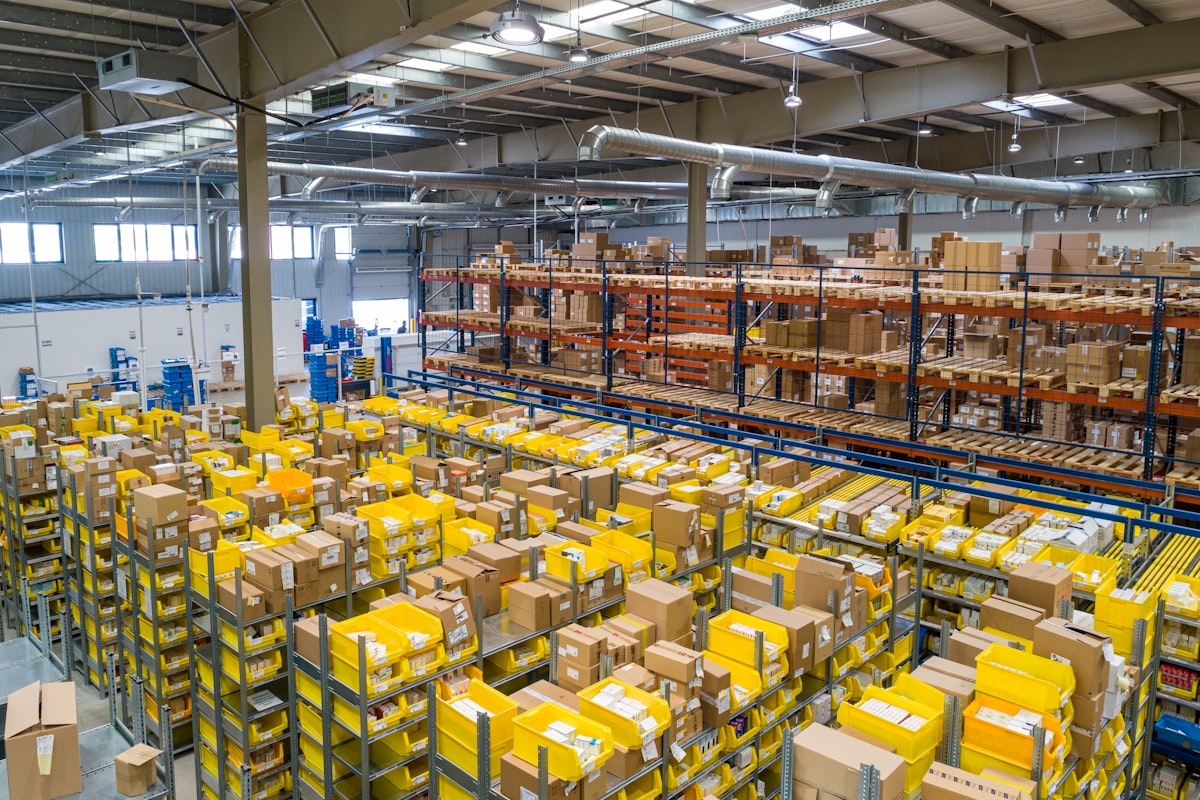 Modern automated distribution: AI-powered document verification and optical character recognition accelerate customs filing.
- Automated HS Code Classification Engines: Modern freight forwarders utilize AI models that ingest product descriptions, technical datasheets, and material compositions to instantly suggest matching 10-digit TARIC codes, preventing €3 misclassification fines.
- BADR Predictive Risk Scoring: Moroccan Customs uses automated algorithmic risk evaluation to assign green, orange, or red clearance circuits based on historical importer compliance, commodity risk, and origin integrity.
- Smart PortNet Pre-Validation: Optical Character Recognition (OCR) tools scan commercial invoices and packing lists, auto-populating DUM draft fields and flagging weight discrepancies before official submission.
- Predictive Ro-Ro Vessel Booking: Freight software predicts Strait of Gibraltar weather disruptions, advising dispatchers to reroute urgent cargo via Motril or Marseille when winds threaten the Algeciras crossing.
10. Critical Mistakes to Avoid When Shipping Morocco-EU
In customs clearance, small oversights trigger devastating delays. In 2026, customs authorities have zero tolerance for sloppy documentation:
- Using Vague Goods Descriptions: Writing "parts", "samples", or "textiles" on invoices results in immediate suspension under EU ICS2 security rules. Customs requires specific declarations (e.g. "Automotive wiring harness for 12V alternators - HS 8544.30").
- Omitting the EUR.1 Preferential Origin: Failing to submit an origin certificate forces the European importer to pay standard Most-Favored-Nation (MFN) duties (often 6% to 14% on finished goods), wiping out commercial margins.
- Discrepancy Between Gross and Net Weights: When the weight on the CMR consignment note fails to match the packing list or port weighbridge ticket, ADII inspectors flag the truck for physical red-circuit examination.
- Ignoring the 10-Digit TARIC Requirement: Entering only 6-digit HS codes on European declarations leads to immediate rejection of H7 datasets.
11. Practical Shipper & Forwarder Checklist 2026
Pre-Departure Verification Checklist:
- [ ] HS Code Audit: All products classified to exact 10-digit TARIC codes with matching Product Identifiers (PID).
- [ ] Invoice Breakdown: Individual unit prices, net weights, gross weights, and Incoterm clearly stated.
- [ ] Origin Proof: Valid EUR.1 certificate issued by ADII, or approved exporter declaration text printed on invoice.
- [ ] PortNet & BADR Status: DUM validated, customs duties liquidated, and BAE issued prior to truck boarding.
- [ ] Transport Contract: CMR signed by driver; sea ferry booking confirmed with trailer registration number.
- [ ] EU Entry Dataset: H7/H1 electronic pre-arrival message successfully acknowledged by EU customs portal.
12. Frequently Asked Questions (FAQ)
Does the EU €3 customs duty apply per item or per parcel?
The EU €3 duty applies per distinct HS code classification line. If a package contains several units of the exact same product sharing one 10-digit TARIC code, €3 is charged once. If the package contains multiple different items requiring separate tariff lines, €3 is assessed on every single line.
Is the €150 duty exemption completely gone?
Yes. Under the EU customs reform 2026, the historic €150 de minimis customs duty exemption is being completely removed. Every imported shipment entering the EU from non-member countries is now subject to formal electronic declaration and customs duties, regardless of low declared value.
How is the €3 EU customs duty calculated?
The calculation is direct: count the number of separate 10-digit HS tariff categories declared on the customs entry and multiply by €3. For example, a parcel containing three distinct items pays 3 × €3 = €9 in customs duty. Import VAT is then assessed on the combined CIF value plus customs duties.
What is the EU €2 handling fee?
Slated for introduction in November 2026, the €2 Union handling fee is a centralized administrative charge on low-value parcels processed through electronic border customs portals. It funds the EU Customs Data Hub infrastructure and automated risk filtering.
Does the €3 duty apply to B2B shipments?
Standard commercial B2B shipments documented with full H1 declarations and supported by a valid Moroccan EUR.1 origin certificate benefit from 0% preferential duty under the EU-Morocco Association Agreement. The €3 flat duty specifically targets non-preferential, low-value e-commerce and courier shipments.
Does the €3 duty replace VAT?
No. The €3 charge is a customs duty. Import VAT (ranging between 19% and 27% across European member states) remains fully applicable and is calculated on top of the customs value and duty.
13. Conclusion & Official ADII Disclaimer
The 2026 trade landscape between Morocco and the European Union offers immense opportunities for agile operators who master regulatory mechanics. Tanger Med provides world-class physical velocity; paired with digital precision in BADR and strict compliance with European TARIC standards, your supply chain can outperform competitors burdened by customs delays.
Consolidate multi-item parcels, certify your preferential origins through EUR.1, and embrace AI classification tools to protect your margins under the new de minimis realities.


